
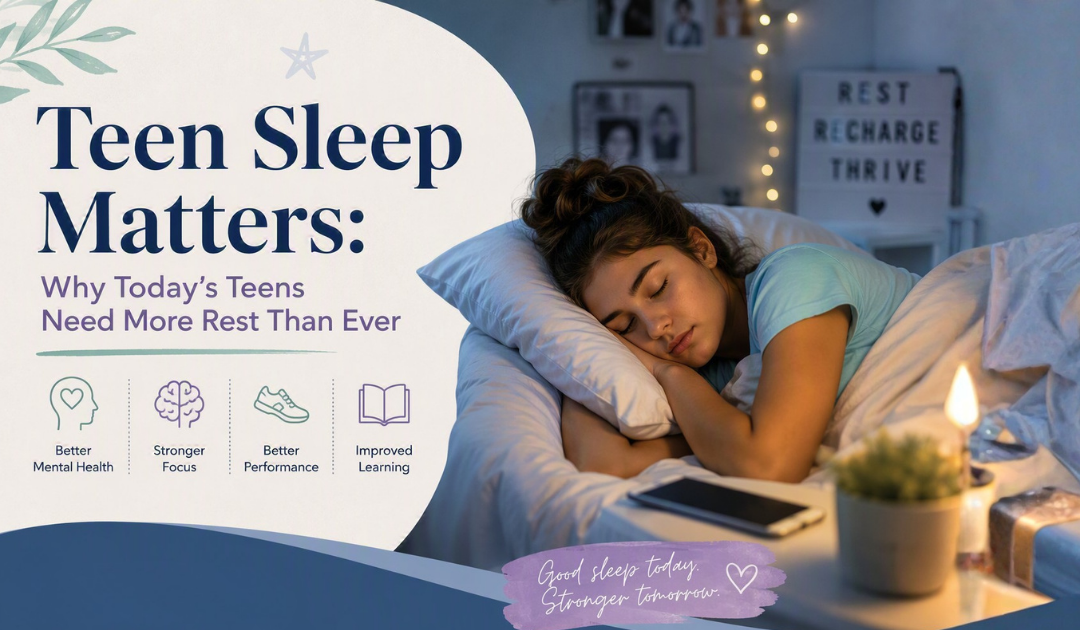
The teenage years are a period of remarkable growth and development. While it may seem like sleep is simply a time to rest, the brain is actually hard at work during the night. Sleep helps support learning, memory, emotional regulation, decision-making, and physical recovery.
Experts recommend that teens ages 13-18 get 8-10 hours of sleep each night, yet many fall short of that goal. As a result, sleep deprivation has become one of the most common health concerns among adolescents.
When teens don’t get enough sleep, they may experience:
-
- Difficulty concentrating and remembering information
- Lower academic performance
- Mood swings and irritability
- Increased stress and anxiety
- Reduced motivation and energy
- Poor athletic performance and slower recovery
- Greater risk of accidents and injuries
Simply put, sleep is not a luxury. It’s a necessity.
Why Teens Struggle to Get Enough Sleep
Many parents wonder why their teens can’t just go to bed earlier. The answer is more complicated than it seems.
Biology Plays a Role
During adolescence, the body’s internal clock naturally shifts. Many teens don’t begin to feel sleepy until later in the evening, often around 10:00 or 11:00 p.m. As a result, falling asleep early can be challenging, even when they’re tired.
Unfortunately, school start times often require teens to wake up before their bodies are ready, leading to chronic sleep deprivation.
Technology Never Sleeps
Today’s teens are connected around the clock. Social media, streaming platforms, gaming, group chats, and endless notifications can make it difficult to unplug at night.
Many teens aren’t simply using devices before bed. They’re maintaining Snapchat streaks, scrolling TikTok, responding to messages, watching videos, or checking homework assignments online. These activities keep the brain alert when it should be winding down.
Packed Schedules
Homework, sports, clubs, volunteer work, jobs, and family responsibilities all compete for attention. With so many demands on their time, sleep often gets pushed to the bottom of the priority list.
The Connection Between Sleep and Mental Health
Sleep and mental health are closely connected.
When teens don’t get enough sleep, they may become more emotionally reactive and have a harder time coping with everyday challenges. Sleep deprivation can increase feelings of stress, anxiety, frustration, and sadness. It can also make existing mental health concerns more difficult to manage.
On the other hand, quality sleep helps teens regulate emotions, build resilience, manage stress, and maintain healthier relationships with friends and family.
One of the simplest ways to support a teen’s emotional wellness is to help them develop healthy sleep habits.
Signs Your Teen May Not Be Getting Enough Sleep
Teens don’t always recognize when sleep deprivation is affecting them. Watch for these common warning signs:
-
- Difficulty waking up in the morning
- Falling asleep in class or during car rides
- Increased irritability or moodiness
- Trouble focusing or remembering information
- Declining grades
- Frequent use of caffeine or energy drinks
- Sleeping for long periods on weekends
- Lack of motivation or energy
If several of these signs sound familiar, your teen may need more sleep.
How Parents Can Help Teens Get Better Sleep
Create a Sleep-Friendly Bedroom
Teens sleep best in a room that is cool, dark, quiet, and comfortable. Encourage them to use their bed primarily for sleep rather than studying, gaming, or scrolling on their phone.
Creating a relaxing sleep environment helps the brain associate the bedroom with rest.
Develop a Technology Plan
Work with your teen to create healthy technology boundaries at night.
Consider:
-
- Charging phones outside the bedroom
- Using “Do Not Disturb” settings overnight
- Turning off unnecessary notifications
- Avoiding social media before bedtime
Healthy habits are easier to maintain when they’re developed collaboratively rather than imposed.
Reduce Screen Time Before Bed
The light emitted from phones, tablets, computers, and televisions can interfere with the body’s natural production of melatonin, a hormone that helps regulate sleep.
Encourage your teen to reduce screen use 30-60 minutes before bedtime and choose calming activities instead, such as reading, journaling, stretching, or listening to relaxing music.
Keep a Consistent Schedule
Encourage your teen to maintain a regular bedtime and wake-up time, even on weekends.
While sleeping in occasionally is tempting, dramatic shifts in sleep schedules can make Monday mornings even more difficult.
Build a Relaxing Bedtime Routine
The body responds well to routines. A consistent series of calming activities can signal that it’s time to wind down.
Ideas include:
-
- Taking a warm shower
- Reading a book
- Stretching
- Practicing deep breathing
- Writing in a journal
- Listening to calming music
Encourage Good Time Management
Procrastination often leads to late-night homework sessions and increased stress.
Helping teens plan ahead and start assignments earlier can free up more time for rest and relaxation in the evening.
Limit Caffeine
Coffee, soda, tea, energy drinks, and even chocolate can interfere with sleep.
Encourage your teen to avoid caffeine later in the day, especially after mid-afternoon.
Support Healthy Napping
A short nap can help make up for lost sleep. When needed, encourage naps that last no longer than 20-30 minutes and occur earlier in the day so they don’t interfere with nighttime sleep.
Talk About Sleep Safety
For teen drivers, sleep deprivation can be especially dangerous. Driving while exhausted can impair reaction time and decision-making in ways similar to alcohol impairment.
Help your teen understand that getting enough sleep isn’t just about feeling better. It’s also about staying safe.
The Bottom Line
Teenagers face more demands, distractions, and pressures than ever before. Between academics, activities, social media, and busy schedules, getting enough sleep can be challenging. Yet sleep remains one of the most powerful tools for supporting a teen’s physical health, emotional well-being, academic performance, and overall success.
By helping teens prioritize sleep and establish healthy habits, parents can give them a foundation that supports every aspect of their lives. Because when teens sleep well, they learn better, feel better, perform better, and are better equipped to thrive.